
The Great 2027 Austin Rubber-Stamp Rodeo: Why the 90th Legislature Wants Your Builder Grading Their Own Homework
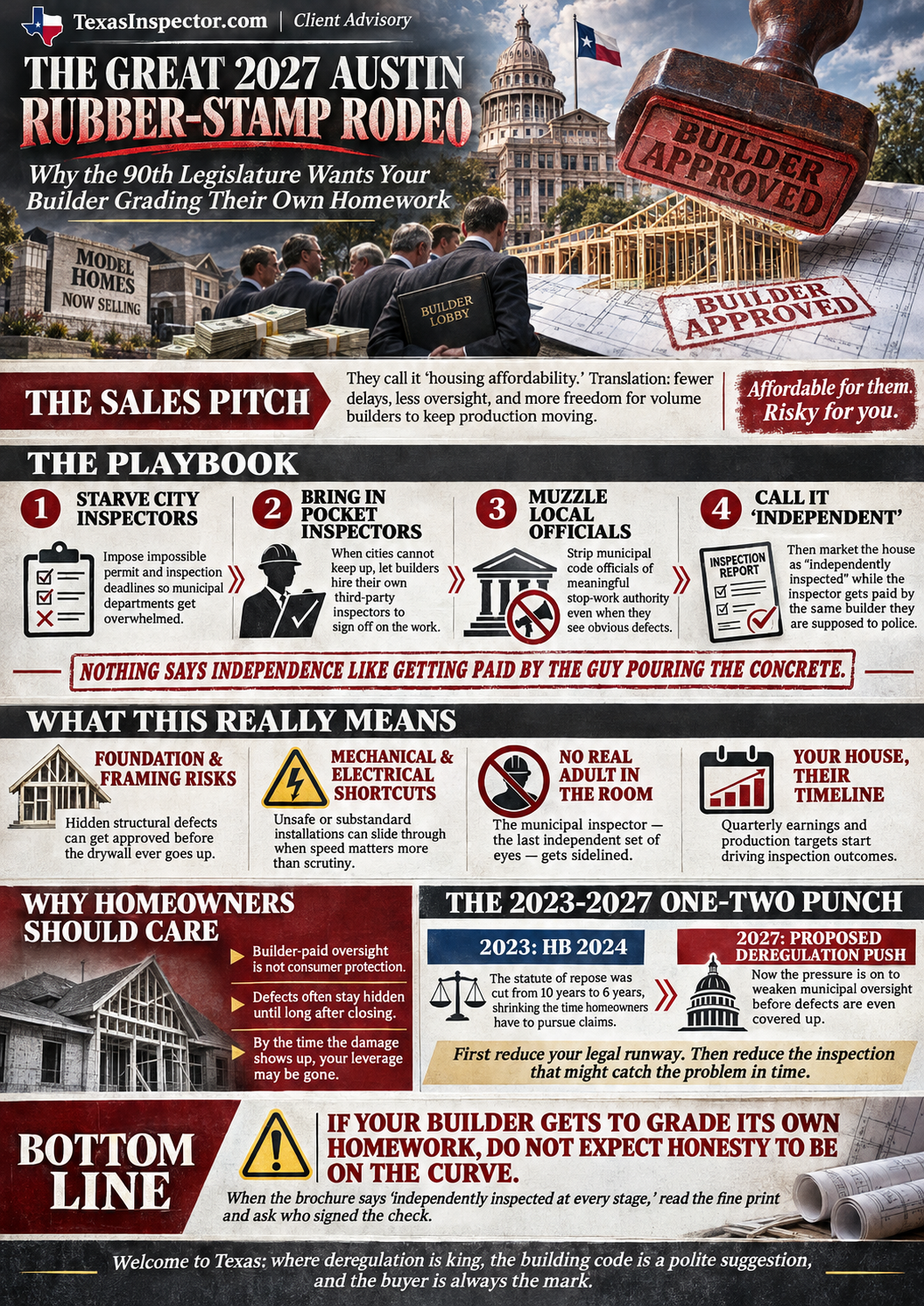
Every odd-numbered January, a majestic natural migration occurs in Texas. Swarms of production-builder lobbyists descend upon the State Capitol in Austin, clutching crocodile-skin briefcases stuffed with campaign contributions and wearing their best crocodile tears. Their solemn, heartbreaking mission for the 2027 legislative session is to save the everyday Texan from the tyranny of affordable housing shortages. And if you buy that line of altruistic garbage, you are probably the same guy who thinks a ten-dollar rubber soaker hose from Home Depot will keep eight thousand tons of heaving North Texas clay from snapping your foundation in half, or that the “structural warranty” they handed you at closing has more legal and financial value than a damp chili-dog napkin.
When these guys whisper the magic words housing affordability into a legislator’s ear, they are not talking about trimming their own profit margins or lowering lot prices. They are talking about the unbearable financial trauma of having a municipal building inspector tell them they cannot pour concrete over a trench full of rainwater or bury unbonded electrical conduit behind drywall. To a volume builder, municipal code enforcement is not a safety net that keeps your house from collapsing or catching fire; it is an inconvenient bottleneck between their quarterly earnings call and your life savings.
Back in 2025, they slipped Senate Bill 1202 through the cracks under the noble guise of helping folks get home backup power installed faster after grid panics. That bill allowed third-party providers to bypass city plan reviews and inspections for generators and energy storage systems. We warned you at the time that it was a Trojan horse, a test run to see if the legislature would let private industry privatize public safety. The experiment worked like a charm, and now the builder lobby is back at the trough for the 90th Session to blow the barn doors completely off.
The grand strategy this cycle is simple: starve the city building departments with impossible statutory shot-clocks, and when the overwhelmed municipal inspectors cannot clear six hundred tract-home permits in forty-eight hours, mandate that the builder gets to hire their own private third-party inspector to sign off on the framing, foundation, and mechanicals instead.
Think about the sheer, unadulterated brilliance of this scam. Under this cozy little arrangement, the volume builder cutting five hundred checks a month to a third-party engineering firm expects you to believe that same firm is going to walk onto a jobsite in Prosper, fail thirty houses for missing shear-wall hold-downs and butchered floor joists, and halt production. And if you are gullible enough to swallow that pitch, I know a superintendent who would love to explain how a two-inch gap in your brick veneer is just “normal Texas house settling” that a tube of fifty-cent painter’s caulk will fix right up, right before their twenty-two-year-old warranty rep swears the black fuzz growing behind your baseboards is just “construction dust” that needs a little bleach and a positive attitude. In the real world, a third-party “pocket inspector” who fails a tract builder’s framing package on a Tuesday is an unemployed inspector by Wednesday afternoon. They do not get paid to find defects under the International Residential Code; they get paid to generate a green sticker from the front seat of an air-conditioned Ford F-150 at thirty-five miles per hour.
Even worse, these legislative proposals are specifically engineered to strip local municipal building officials of their stop-work authority. If a city code official drives past a subdivision and sees roofers slapping shingles over soaked, delaminating OSB, or plumbers swiss-cheesing load-bearing studs beyond every structural limit in IRC Chapter 6, the state wants that city official legally muzzled so long as a private third-party rubber-stamper uploaded a PDF to a web portal.
Now combine this privatized inspection circus with the statutory trap the legislature already set for you back in 2023 with House Bill 2024. First, they slashed the Statute of Repose from ten years down to six, giving your house just enough time to hold itself together with caulk and prayers until your legal right to sue evaporates. Next, they omitted building codes from their sales contracts so you cannot sue them for breach of contract when the house violates the law. And now, for their 2027 grand finale, they want to eliminate the last independent adult in the room—the municipal code inspector—before the drywall even goes up. If you buy into this fairy tale, you might as well sign their mandatory arbitration clause right now and let their corporate defense attorney pick out which shade of structural lipstick they are going to smear over your framing defects.
Of course, none of this legislative arson happens in a vacuum. It happens because every two years, Texas homeowners march into the voting booth, pull the lever for the same bumper-sticker-spouting morons who campaign on “cutting government red tape,” and then act shocked when the red tape those clowns just cut was the only thing forcing their builder to bolt the roof rafters to the top plate. As long as you keep sending these developer-owned stooges back to Austin to feast on Political Action Committee steak dinners, they will keep serving your consumer rights up on a platter for dessert. You are getting the exact government service you voted for—it is just being delivered to your builder instead of you.
When the dust settles on the 90th Legislature, the sales agent in the model home will still hand you a glossy brochure boasting that your half-million-dollar cardboard box was “independently inspected and certified at every stage.” They just will not mention that the guy doing the certifying works on commission for the guy pouring the concrete, the city was legally barred from looking inside the walls, and by the time the structural rot shows up in year seven, the courthouse doors will be bolted shut. Welcome to Texas, where deregulation is king, the building code is a polite suggestion, and the buyer is always the mark.


