
Step into any master-planned model home in Celina, Princeton, or Midlothian, and you will be greeted by designer staging, complimentary espresso, and a sales rep whose canned smile promises you the suburban dream. They love talking about quartz countertops, luxury vinyl plank flooring, and temporary interest rate buydowns that make monthly payments look suspiciously reasonable. What they conveniently forget to mention while sliding the contract across the desk is that you are not just buying a house; you are quietly inheriting a thirty-year civil engineering debt trap.
The PID Magic Trick and News Exposure
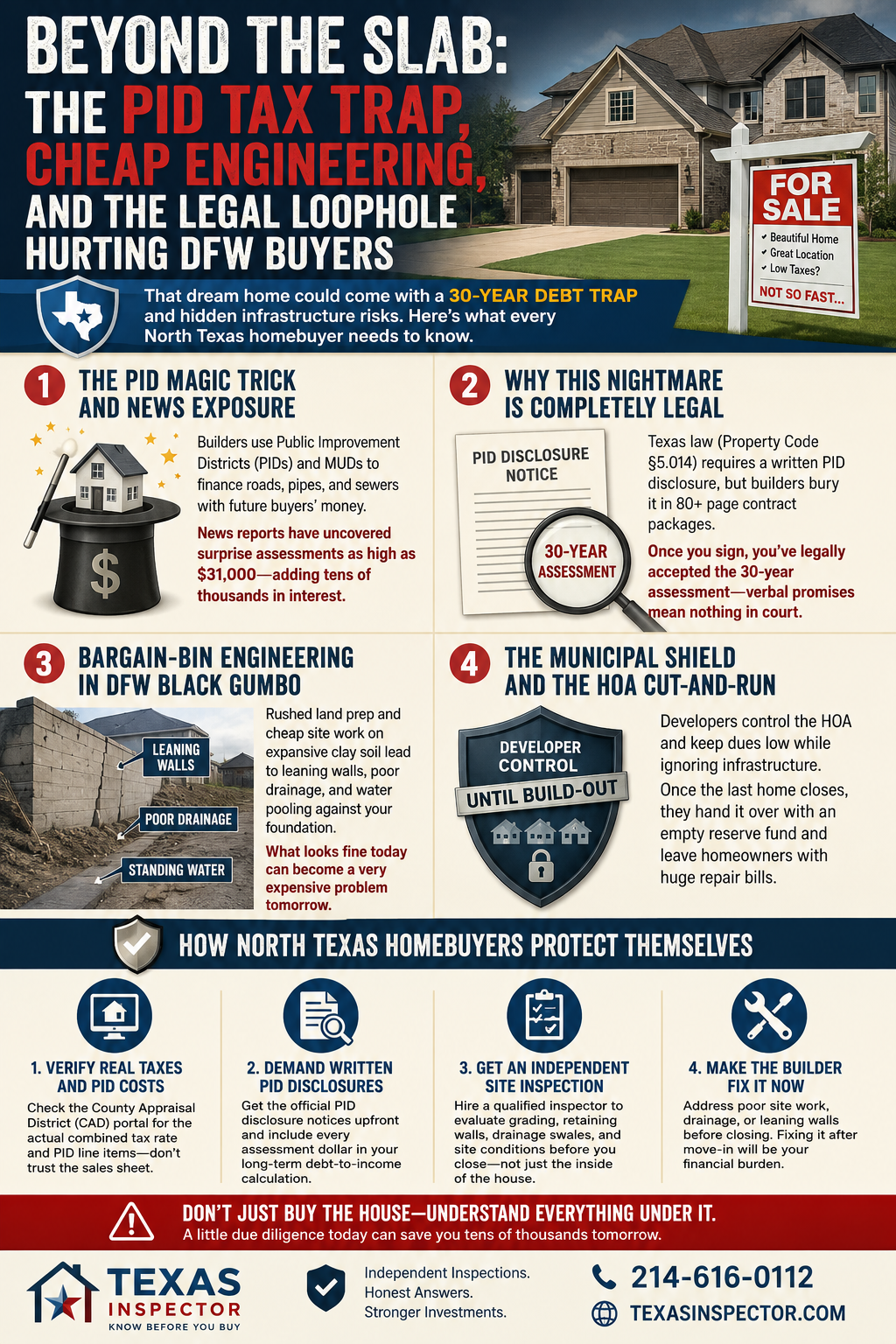
Builders in outer-ring North Texas suburbs love Public Improvement Districts (PIDs) and Municipal Utility Districts (MUDs) because these mechanisms let them finance roads, pipes, and sewers using future buyers’ money instead of their own capital. When you ask about taxes in the sales office, reps routinely quote the baseline city or county rate while muttering something delightfully vague about a nominal district fee. Multiple investigative reports by the CBS Texas I-Team highlighted this exact scheme when nearly one hundred buyers in a Denton development discovered they were hit with surprise $31,000 PID assessments that added tens of thousands of dollars in interest. Similar cases surfaced in Royse City, where homeowners watched their expected assessments more than triple after signing contract paperwork, leading real estate litigation attorneys like Rachel Khirallah to represent over a hundred North Texas buyers fighting these predatory debt structures.
Why This Nightmare Is Completely Legal
While this setup feels like an outright scam, developers are operating completely within the law thanks to builder-friendly Texas statutes. Under Texas Property Code Section 5.014, sellers are technically required to provide a statutory written PID disclosure notice before a buyer signs a binding contract. However, builders do not hide the PID notice; they bury it inside an eighty-page digital contract package alongside dozens of other addenda. The moment you electronically sign that standardized addendum, you have legally acknowledged the thirty-year assessment, rendering any verbal promises from sales reps completely useless in a court of law.
Bargain-Bin Engineering in DFW Black Gumbo
The financial sleight of hand is only half the battle, as the physical quality of PID-funded civil work is where the real comedy of errors begins. North Texas is infamous for expansive clay soil that swells and shrinks like a breathing sponge, requiring meticulous ground prep, soil stabilization, and serious civil engineering. Instead, developers rush land prep to get framing crews on-site quickly, dropping retaining walls and drainage channels straight onto raw, uncompacted mud. Within a year of move-in, those picturesque concrete retaining walls start leaning like the Tower of Pisa, while lot-line swales transform into stagnant, mosquito-infested moats that pool water directly against brand-new slab foundations.
The Municipal Shield and the HOA Cut-and-Run
If you expect municipal inspectors to save you from poor site grading, you will be sorely disappointed. City inspectors only check for bare-minimum surface code compliance on the day of inspection, allowing builders to hide behind a legal shield once the municipality signs off on the phase. Under Texas Property Code Chapter 209, developers are legally permitted to retain total control of the HOA board until the entire subdivision is built out. During construction, the builder keeps HOA dues artificially low to attract buyers while ignoring decaying drainage structures, only to hand the keys to bewildered residents the second the final house closes, leaving the community with an empty reserve fund and massive infrastructure repair bills.
How North Texas Homebuyers Protect Themselves
Protecting yourself from this circus requires throwing out the builder’s glossy marketing brochures and doing your own ruthless digging before putting down a single dollar of earnest money. Start by checking the local County Appraisal District portal to verify the actual combined tax rate and PID line items rather than trusting the estimated payment sheet printed in the sales office. You must demand the official written PID disclosure notices upfront, ensuring every assessment dollar is calculated into your long-term debt-to-income ratio before signing. Finally, hire an independent inspector to step outside the footprint of the home and evaluate macro site grading, retaining wall plumbness, and perimeter drainage swales so you force the builder to fix their cheap site prep mistakes before they become your permanent financial burden.


